Street Photography – Cutting the Crap

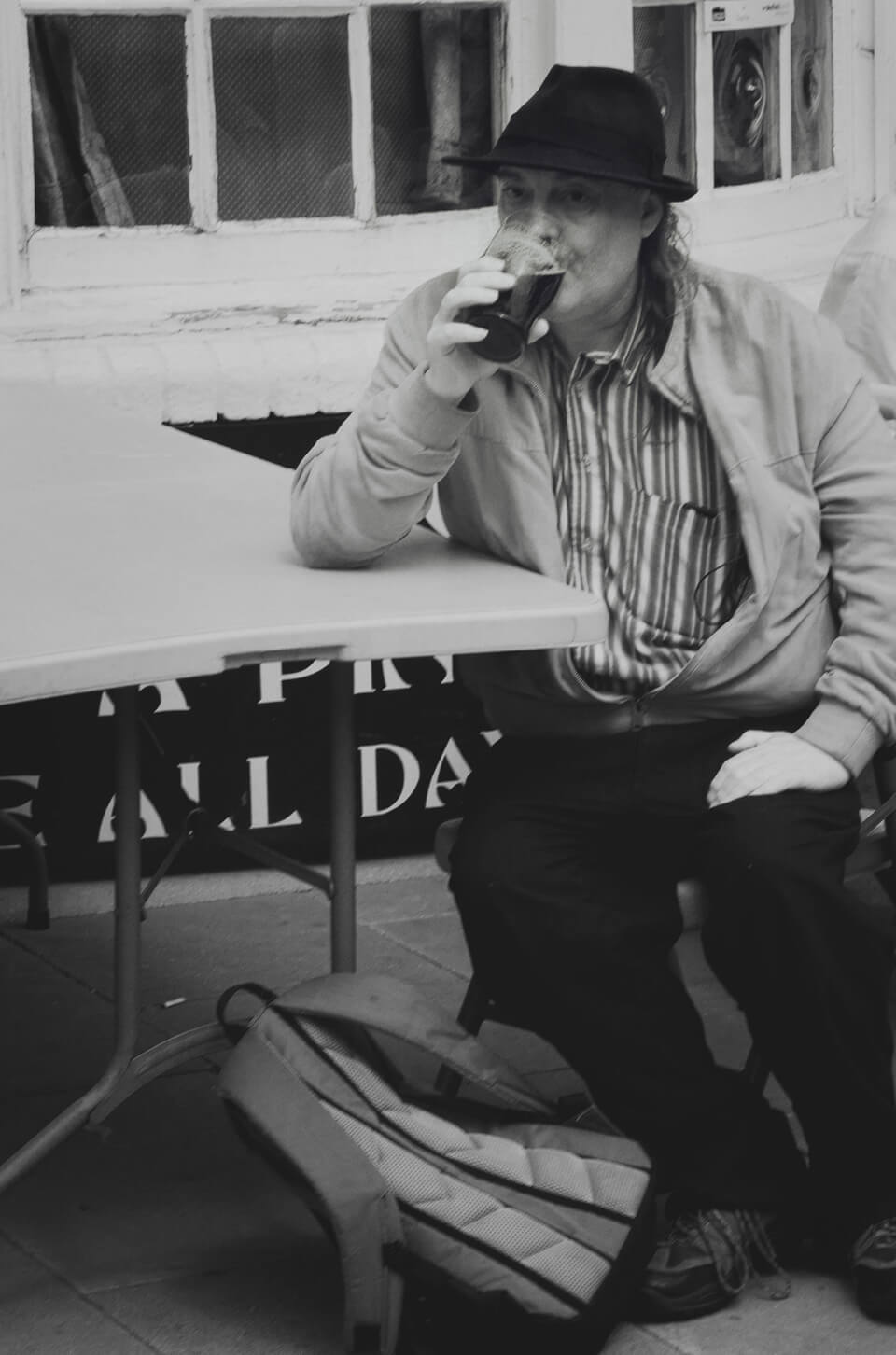
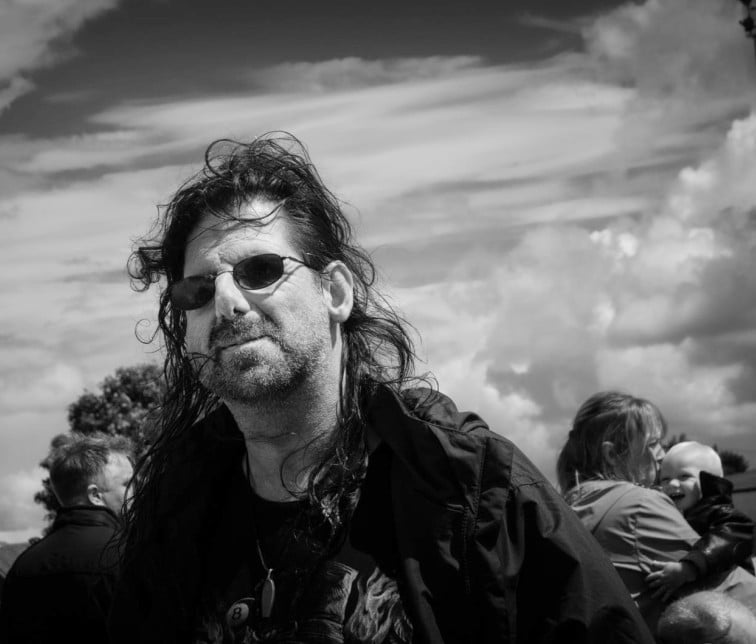
A street photography portrait capturing a man with long hair in black and white.

Street Photography – Cutting the Crap

Think of a street photographer, one of your favourites. It could be anyone from CartierBresson to someone whose pictures you like on Facebook. Now think about their photographs, the really memorable ones. The ones that immediately spring to mind when someone mentions the photographer’s name. Chances are there won’t be all that many. Even the greats are known for relatively few images.

Therein lies the problem facing photographers today. If even the greats have relatively few ‘great’ images out of the many thousands they have taken what hope for the rest of us?

Out of the millions of pictures posted on Facebook, Instagram, Flickr and so on how can we make sure that at least a few of our own photos are amongst the memorable ones?

Street photography in particular seems to be going through a resurgence. Maybe it’s down to easier access to high quality small cameras; maybe it’s just because everyone has a camera with them all the time in their mobile phone. Maybe street photography is suddenly “cool”.

However, this popularity brings its own problems; inevitably most photographs will not be classics and the sheer number of pictures makes it harder to spot the truly memorable ones. The first step must be to make sure that the photograph itself is interesting. This does not necessarily mean that it’s technically perfect or even that it is one with the most ‘likes’.

Of course everyone will have a different view on what constitutes an ‘interesting’ photo but a key factor must be that the picture tells a story. A distinction might be made between single images and those that make up a series or photo essay as in this case it is the set of pictures that tells the story.

But back to single images; the type we post every day on the Facebook groups; how can we be sure that they are interesting and tell a story?

A suggestion: describe your photograph in a single sentence. It doesn’t need to be poetic or especially descriptive, just say what you see. If the sentence you’ve written tells you everything you need to know then the chances are that the picture fails the ‘interesting story’ test. If you find that the sentence leaves you wanting to know more then maybe your photograph warrants a closer look and will capture the viewer’s imagination.

Take the following examples:

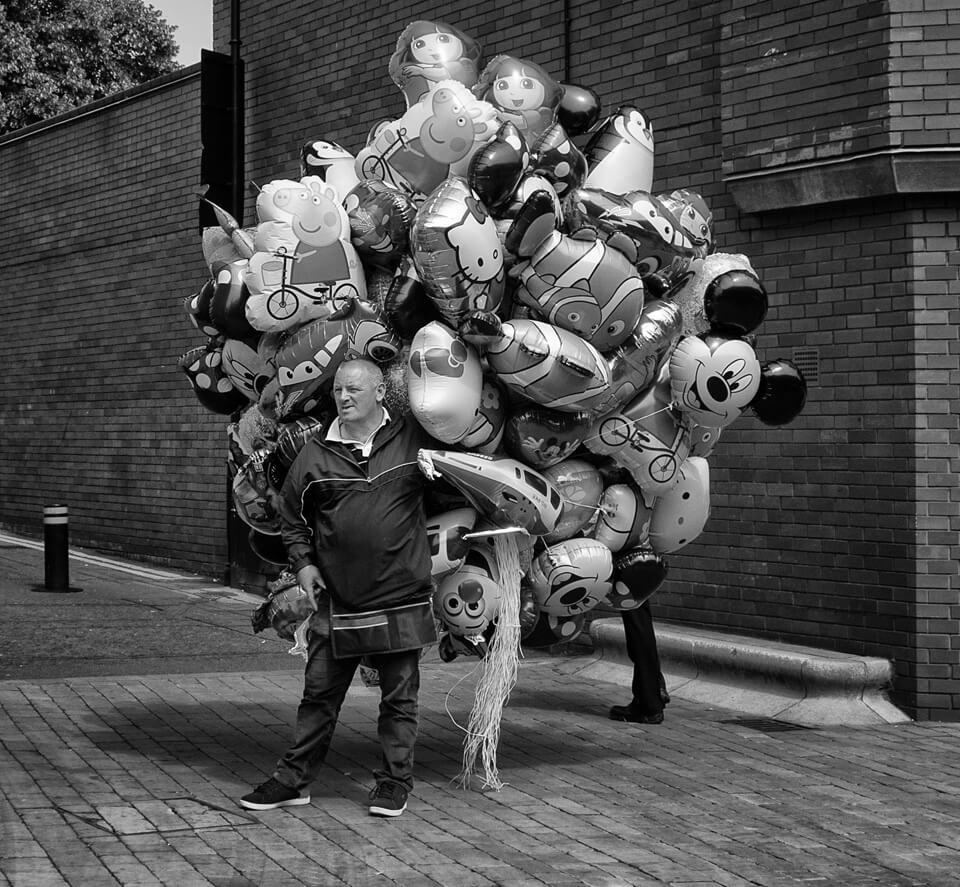
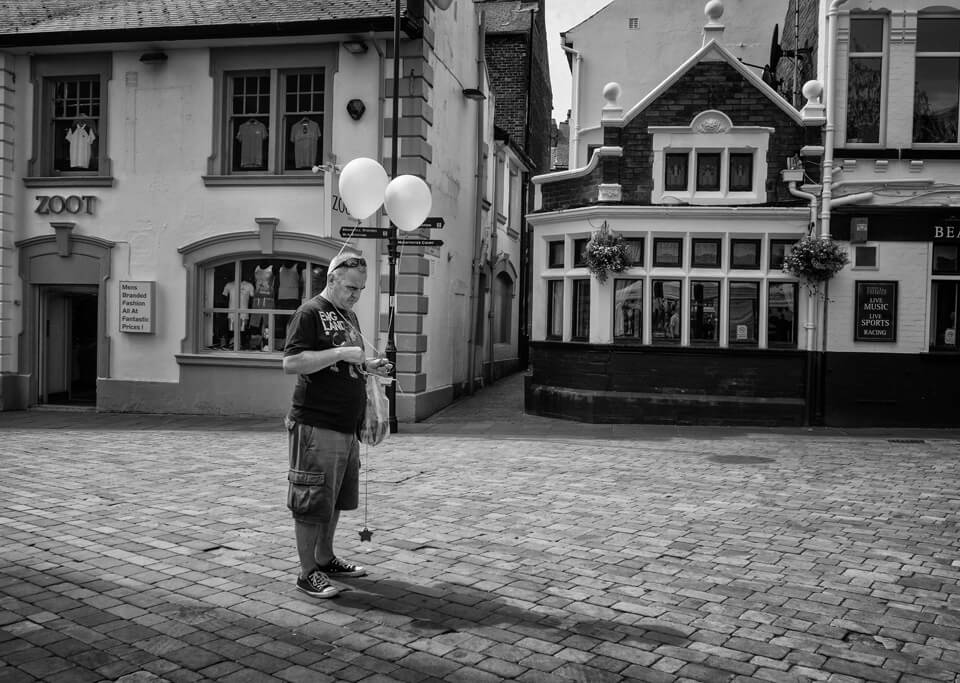
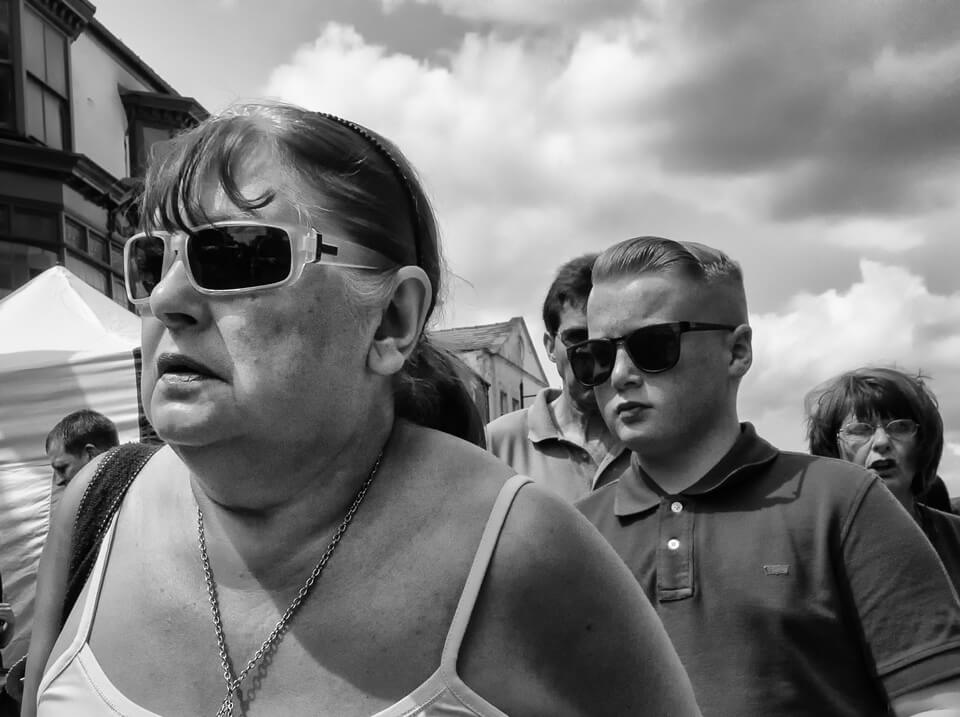
1. “A man with long hair and dark glasses is stood under a cloudy sky.”

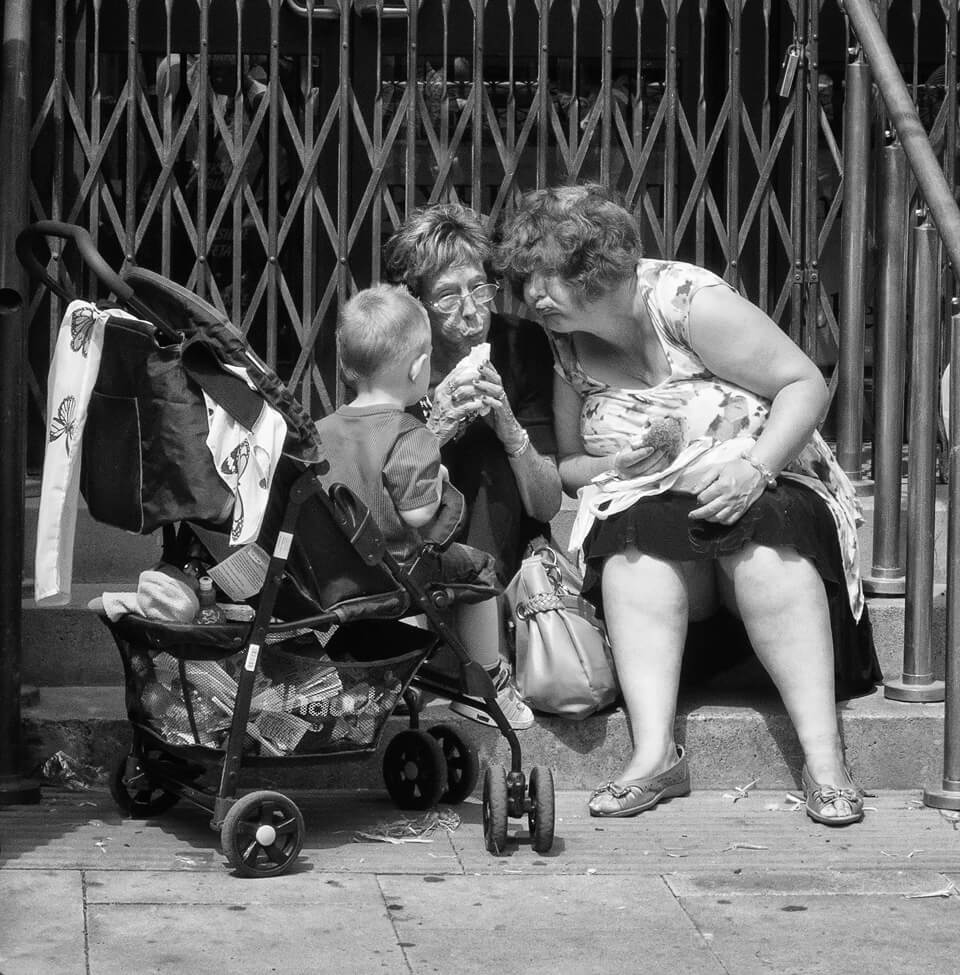
2. “A long haired man with dark glasses is walking away from a woman kissing a child.”

The first example says it all; the second poses the question ‘why is he walking away?’ or ‘what is the relationship between them?’

If the reader/viewer wants to know more then maybe the picture works.

Undoubtedly there is more to determining what makes a good street photograph than this but it could be a useful tool in deciding which picture is worthwhile and which should be consigned to the reject pile.

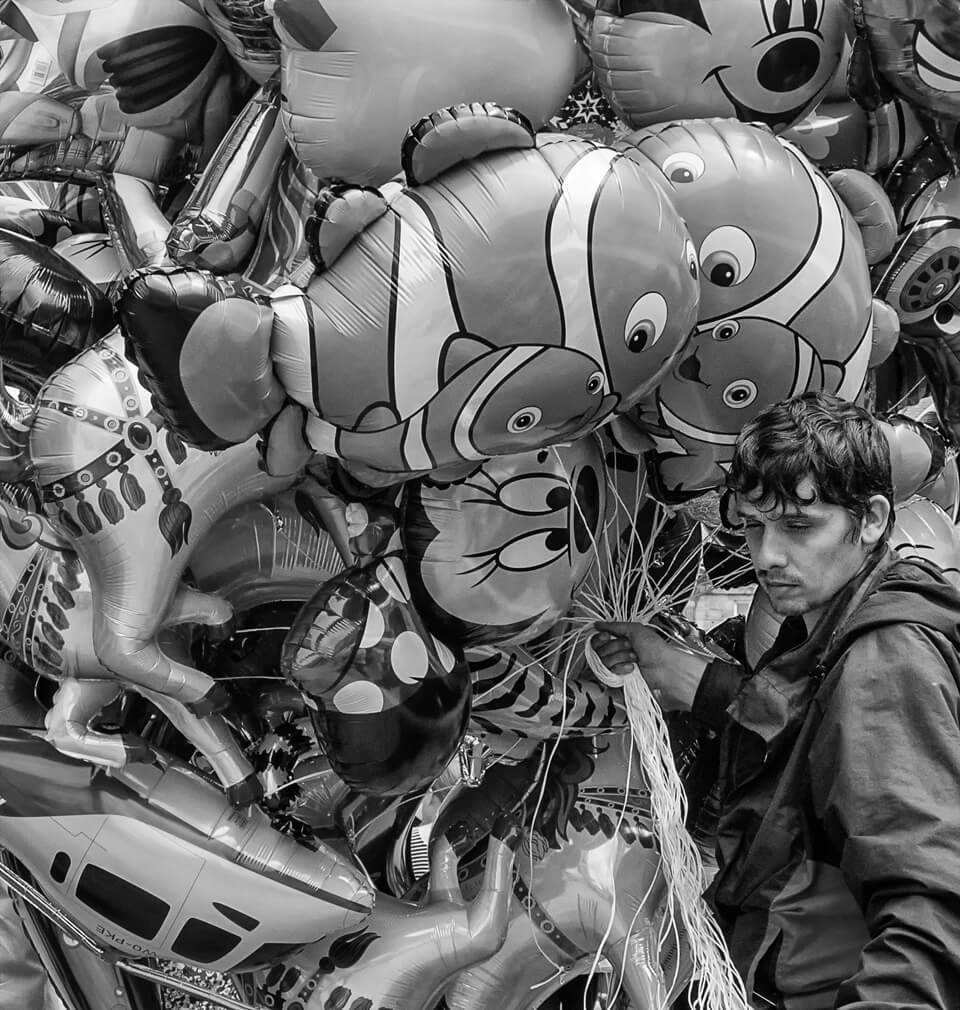
A man with long hair captured in a black and white street photograph. A street photography portrait capturing a man with long hair in black and white.
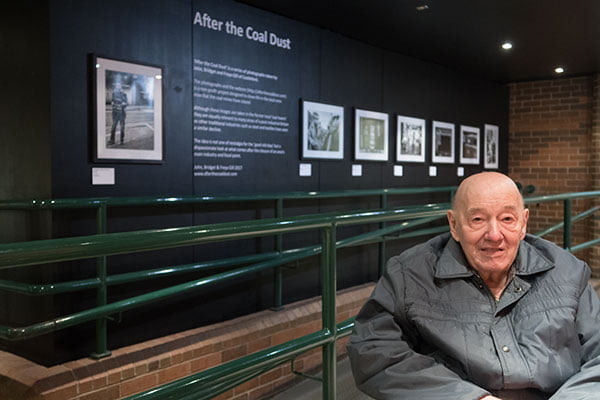
Elliott Sheard 1926-2017

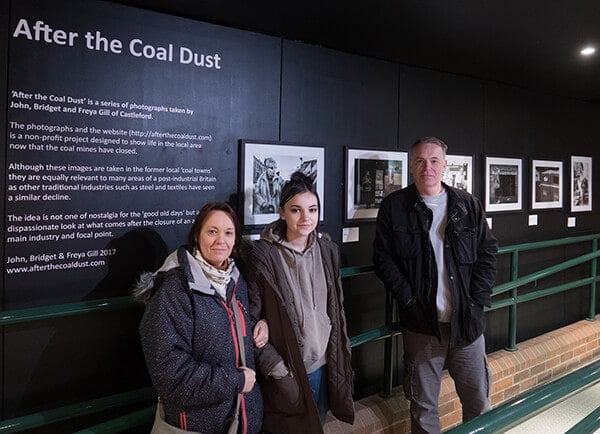
After the Coal Dust exhibition at National Mining Museum for England

Elliott Sheard 1926-2017

Sadly Bridget’s father Elliott Sheard the former Bevin Boy featured on the site passed away on the 19th May aged 90. He managed to visit the After the Coal Dust exhibition at the National Mining Museum and greatly enjoyed the good wishes from both staff and visitors at the museum. He will be sadly missed by all his family and friends.
Elliott Sheard

Why do we take street photos?

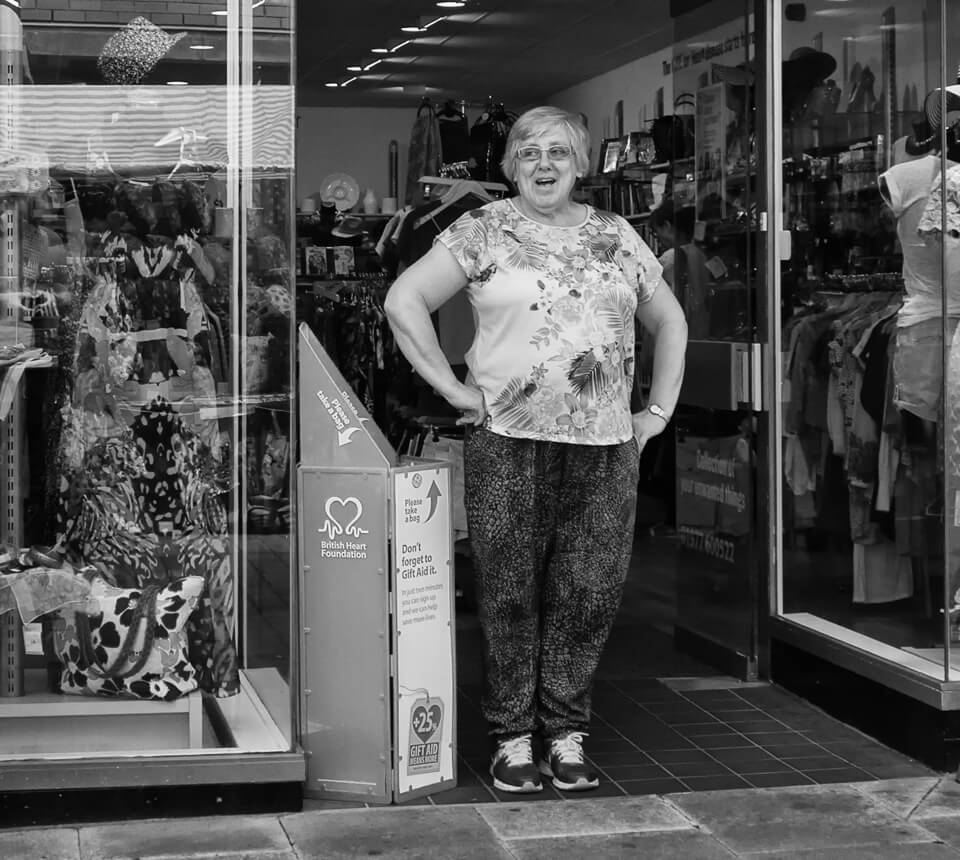
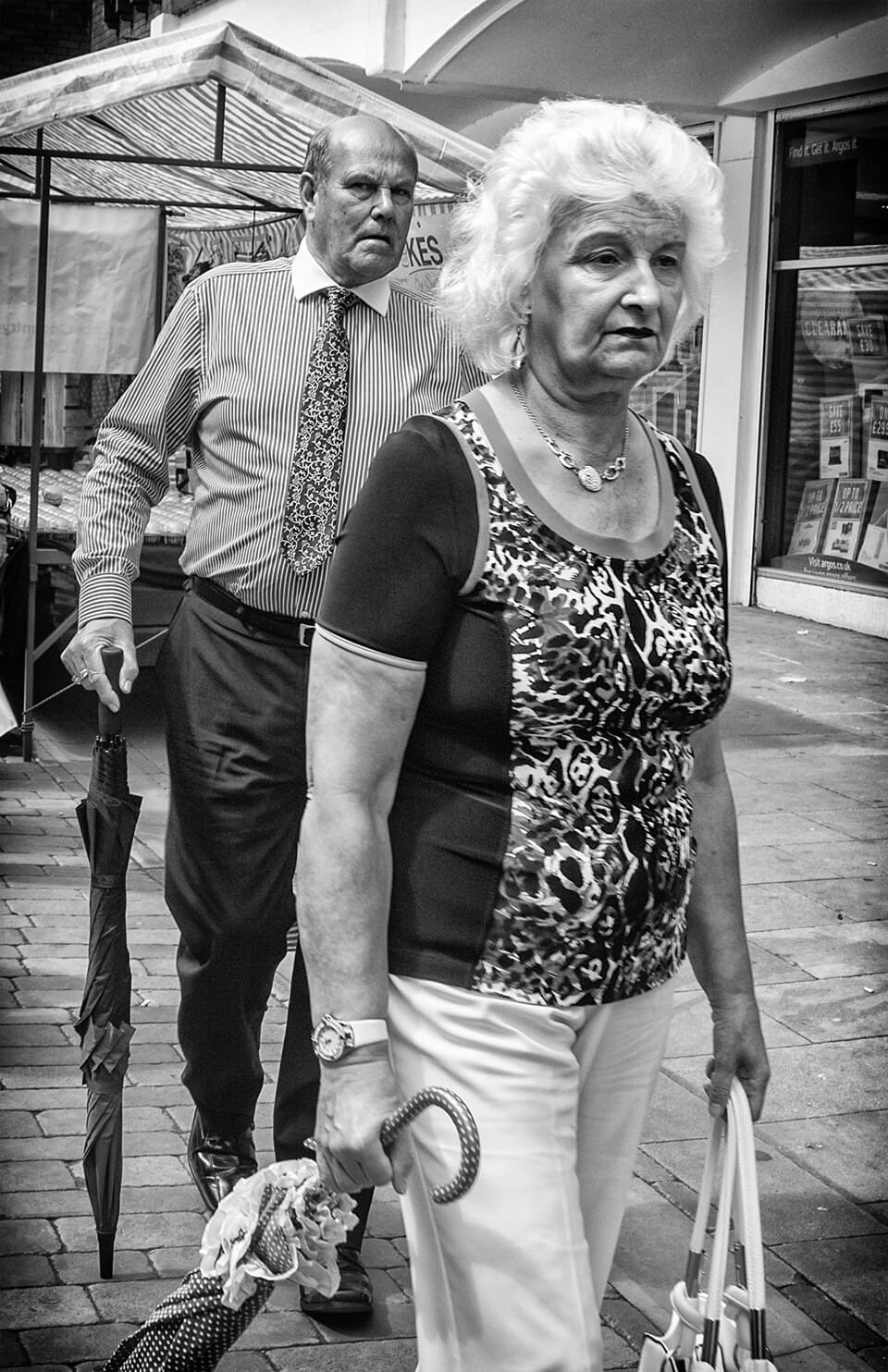
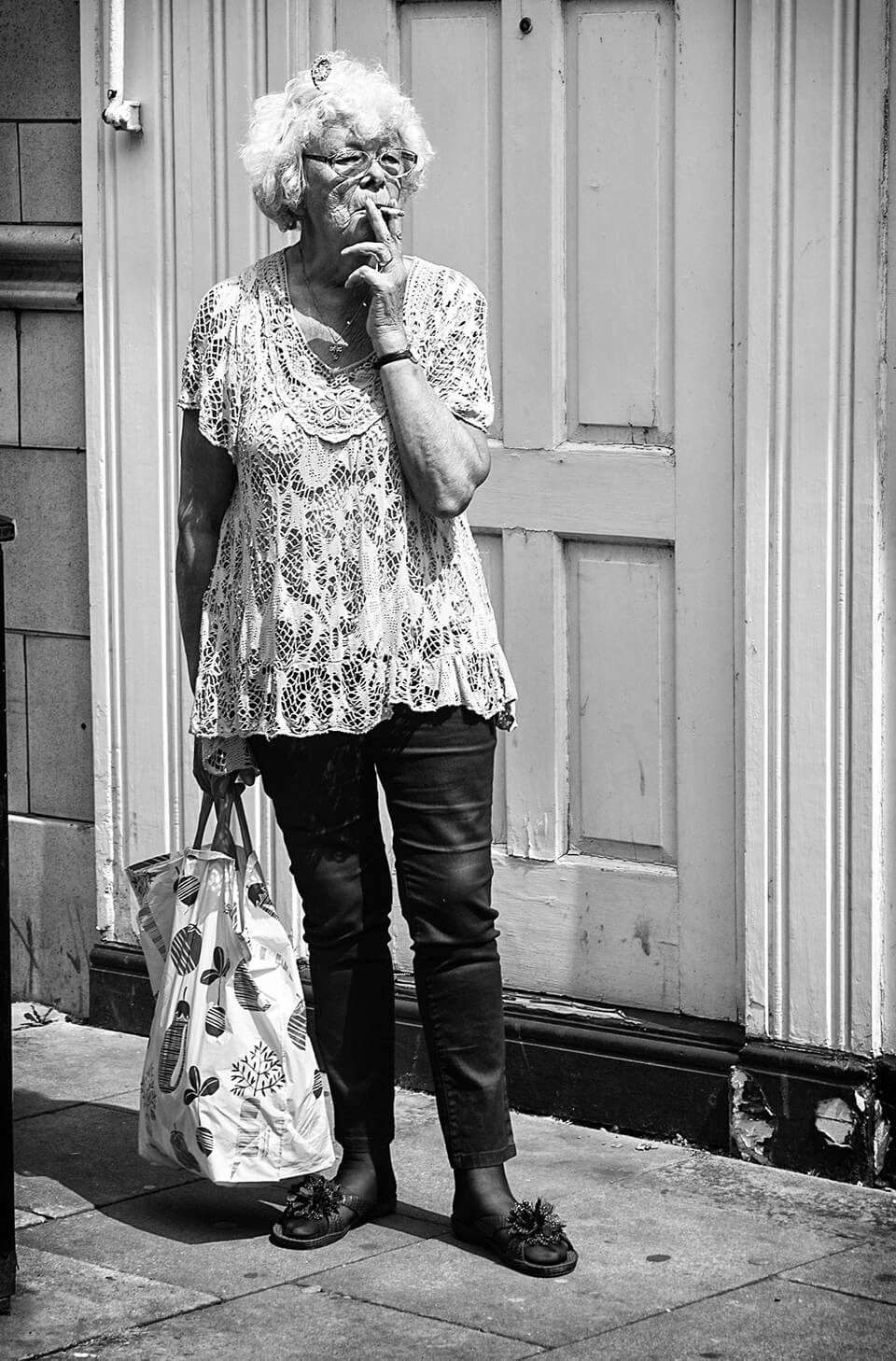
A street photography snapshot captures an old woman in black and white.

Street Photography – Not a “How-To”

Step 1: – Point the camera in the right direction.
Step 2: – Press the shutter.

That’s the technical stuff out of the way (at least for this article!)

With street photography, as with any photography, the ‘why’ is at least as important as the ‘how’. Why subject ourselves to the stress of photographing strangers in the street? It’s certainly not for the money!

Everyone will have their own reasons, but surely the ultimate aim must be to induce an emotional response from the viewer. A successful photograph should impact the viewer on a personal level, either by presenting something that they can identify with or opening their eyes to something new even if that might be something they would rather pretend did not exist. Having a profound effect on a single person is worth more than a hundred Facebook or Instagram likes. Perhaps this is what photographers should strive to achieve rather than vain attempts at popularity.

At its highest level a photograph should be a tripartite experience; the photographer, the subject and the audience. It is not possible for a street photographer to know the subject in depth. At best, all he or she can do is try and convey his or her impression of the subject. A good photograph should leave scope for the viewer ‘to fill in the blanks’. As long as the photographer can impart an emotional connection to the viewer then it is a success. It doesn’t really matter what the viewer feels, as long as they feel something.

Sadly, the storytelling aspect of street photography is often missing. It seems that many street photography books concentrate on the clever or ‘tricksy’ elements such as the cliched advertising hoarding shots with contrived juxtapositions. This type of street photography leaves all the power with the photographer and relegates the subject and viewer to bit-part players. We notice the photographer’s skill but learn nothing about the subject or leave any role for the viewer in creating their own stories.

Street photography should be regarded as art photography. Instead of arranging the scene we must be ready to capture the unfolding mini-dramas that happen all around us. These images are the stills from a movie or documentary where the audience is left to complete the narrative.

If the image is technically well done – then great! Technical considerations are almost incidental. Perfection can appear cold and clinical and life isn’t (nor should it be) like that. The photograph should be a gateway to something more, a look into the life of someone else or a step into something new.

So how do we achieve this psychological resonance? It has to start with the photographer ‘feeling it’ himself/herself. If a photographer is in tune with the emotional potential of the scene the contributing factors fall into place. We must learn to see and to feel before we learn to photograph.

The elements that give an image emotional depth are often the same ones that give the image its aesthetic qualities – often the two cannot be separated. The interplay between the subject and its environment is what draws us into taking the picture in the first place even though we may not consciously be aware of it at the time. It is developing an empathy and receptiveness that makes a photographer something more than a mere recordist. The viewer should not be looking at a photograph, they should be looking at life.

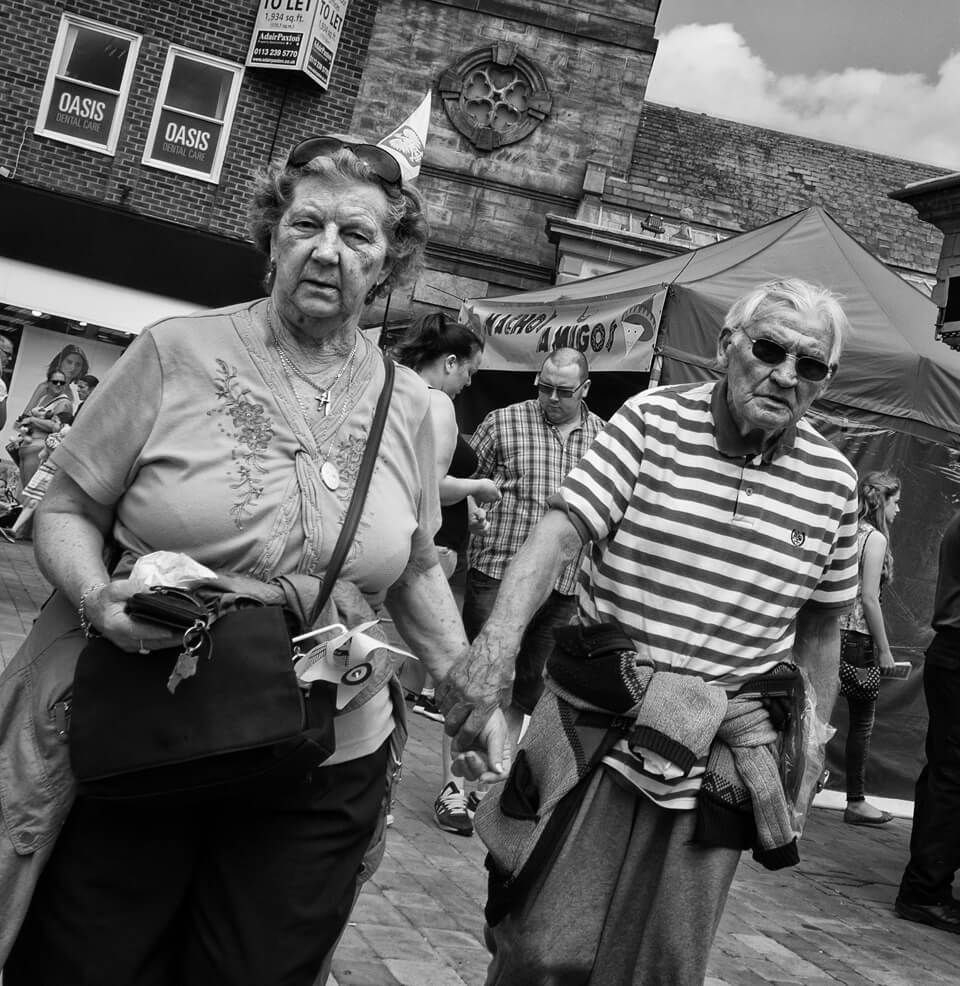
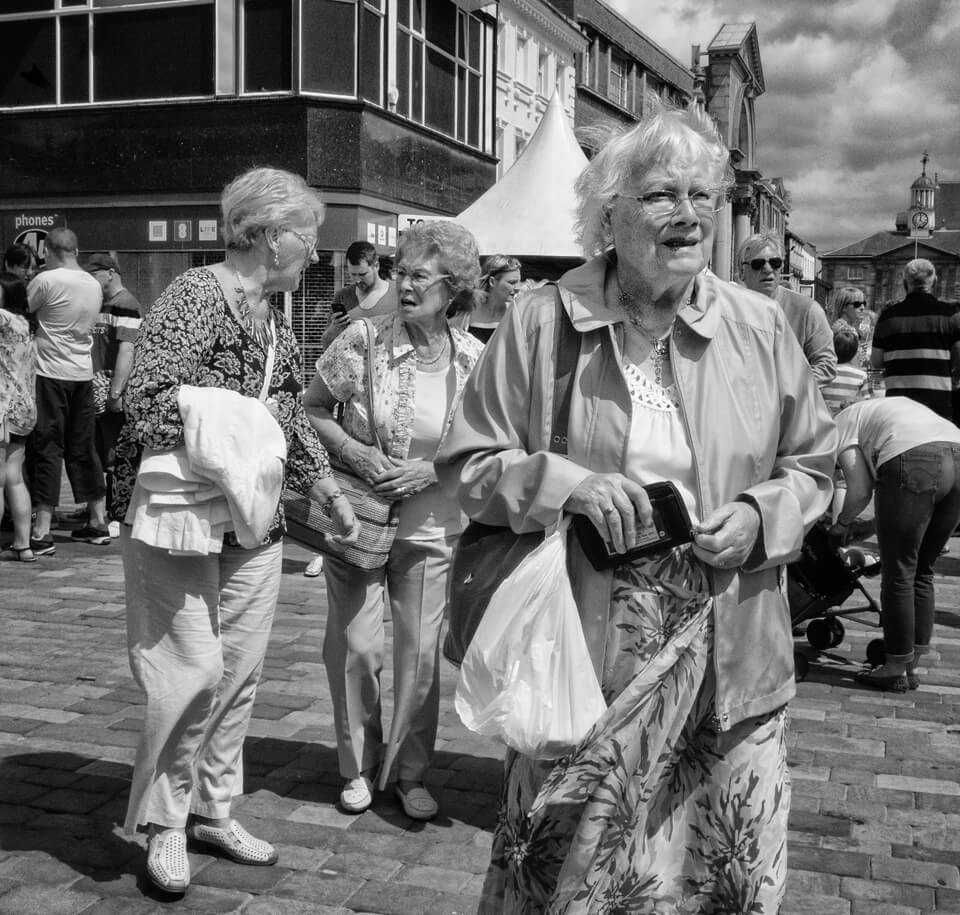
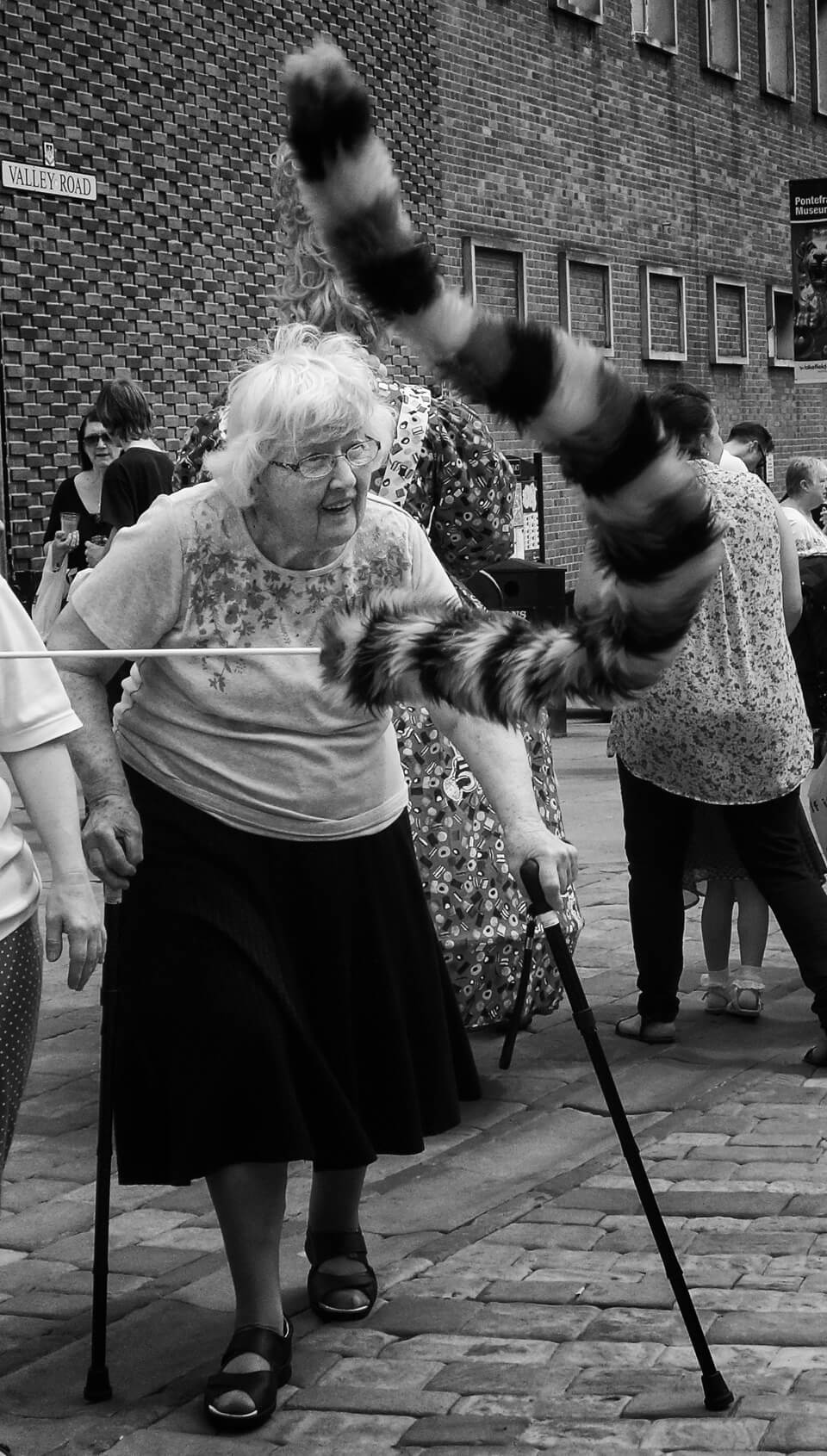
A street photography snapshot captures an old woman in black and white.

This image is far from technically perfect but (hopefully) does have an emotional impact. ©John Gill 2017

A Kellingley Poem

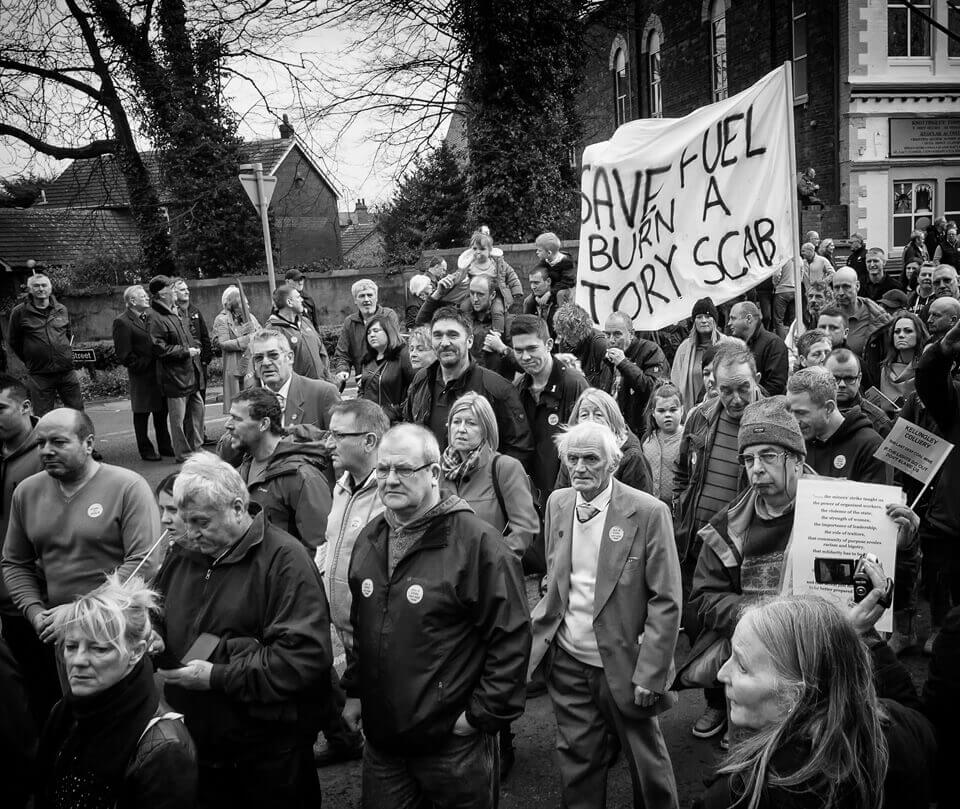
Street photography: Two men in suits sitting together.

KELLINGLEY (a poem by Stuart Bailey)

Today it was the final day for them,
As the team went down the mine,
A sad, sad day for our proud nation,
For deep shaft mining it is the time.

The glory of this our proud nation,
Once built upon these men’s toil and sweat,
Many men injured and some died there,
They were miners please do not forget.

Do not forget that in times of war,
These men served proudly underground,
They toiled hard, they even died there,
Some their bodies they were never found.

Our nation, what was it then built upon,
It was on the backs of men like this,
In steel works, mills and deep coal mines,
The like of them our nation it will miss.

All traces of the mines now disappearing,
Nothing for our future generations to see,
How will future generations know them?
Their story it must be told by you and me.

At Kellingley today the final deed is done,
Miners for the last time went down the mine,
Their task, to cut the main cables to the cages,
Job done then back to the surface this final time.

A concrete plug will be placed in the mineshaft,
There at Kellingley the deed will be finally done,
Today our nations heritage of deep coal mining,
Will pass into history with the setting of the sun.

Stuart Bailey © Stuart Bailey 2016

Thank you to Stuart for permission to include his poem.